
What’s stress got to do with it?
How stress could be affecting your menstrual cycle
Most women have a sense that stress affects their menstrual cycle. You may have noticed that your period was unpredictable during stressful times, like studying for exams, starting a new job or moving house. When it’s short-lived, it’s not too problematic; but when stress is ongoing, that’s a different matter entirely.
The hormone team
Hormones in the body constantly adjust and respond to each other to keep your body functioning smoothly. When it’s working well, it’s flexible and balanced. Imagine it like a well-run orchestra: Each section has its own part to play, and when they keep time with each other, the music feels seamless and sounds great. If one section drifts out of rhythm and plays louder, it sounds discordant. This is what stress hormones do to our menstrual hormones.
This can be incredibly useful in short term situations. They help you to focus and react quickly to get through challenging moments. From an evolutionary perspective, they kept us alive. For example: If you needed to run away from a bear, you definitely want stress hormones to take the lead roles at that point. But once the bear has gone, we need them to return to playing from the music to allow the menstrual hormones to be heard.
The problem with modern stress
Modern ‘bears’ keep prowling around relentlessly. Deadlines, tight schedules, caring roles, finances, relationship challenges etc. Even as you tackle one, another crops up. Many of us think we’re managing by multitasking - which really means quickly flitting between numerous different tasks, keeping our nervous system in ‘high alert’.
We’re stuck in a survival response. Sure, the bears aren’t biting your head off, but they’re not letting you leave the cave, either. You get used to functioning under those conditions and forget what ‘safety’ feels like. Eventually, the stress hormones have been in charge of the orchestra for so long they have completely drowned out the menstrual hormones and you can’t hear the tune anymore.
Here’s what that can look like:
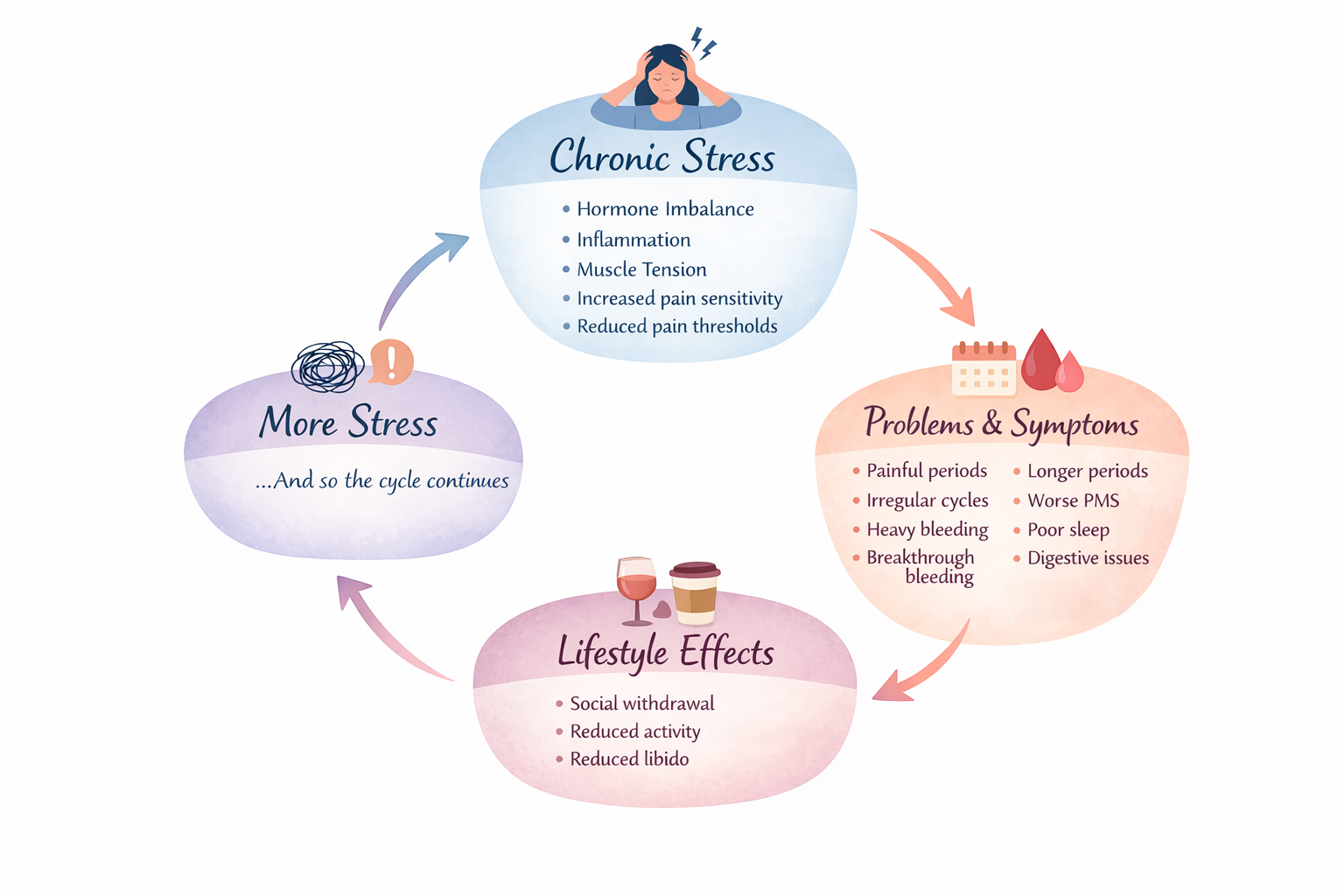
Your body isn’t failing you - it’s protecting you
The body isn’t ‘going wrong’, it’s doing what it’s designed to do under pressure. It’s prioritising the tune that’s needed to get you through. That means less essential functions - like the menstrual cycle - get pushed down the priority list.
How women’s health physiotherapy can help
Women’s health physiotherapy looks at the whole picture, not just one symptom in isolation. Treatment can help to:
Reduce muscle tension and sensitivity
Calm and regulate the nervous system to help rebalance hormones
Improve energy, confidence and body awareness
Support hormone balance through movement
Condition and strengthen muscles to build physical resilience
Empower you to maintain a healthier lifestyle through awareness and education
Here’s what that can look like:
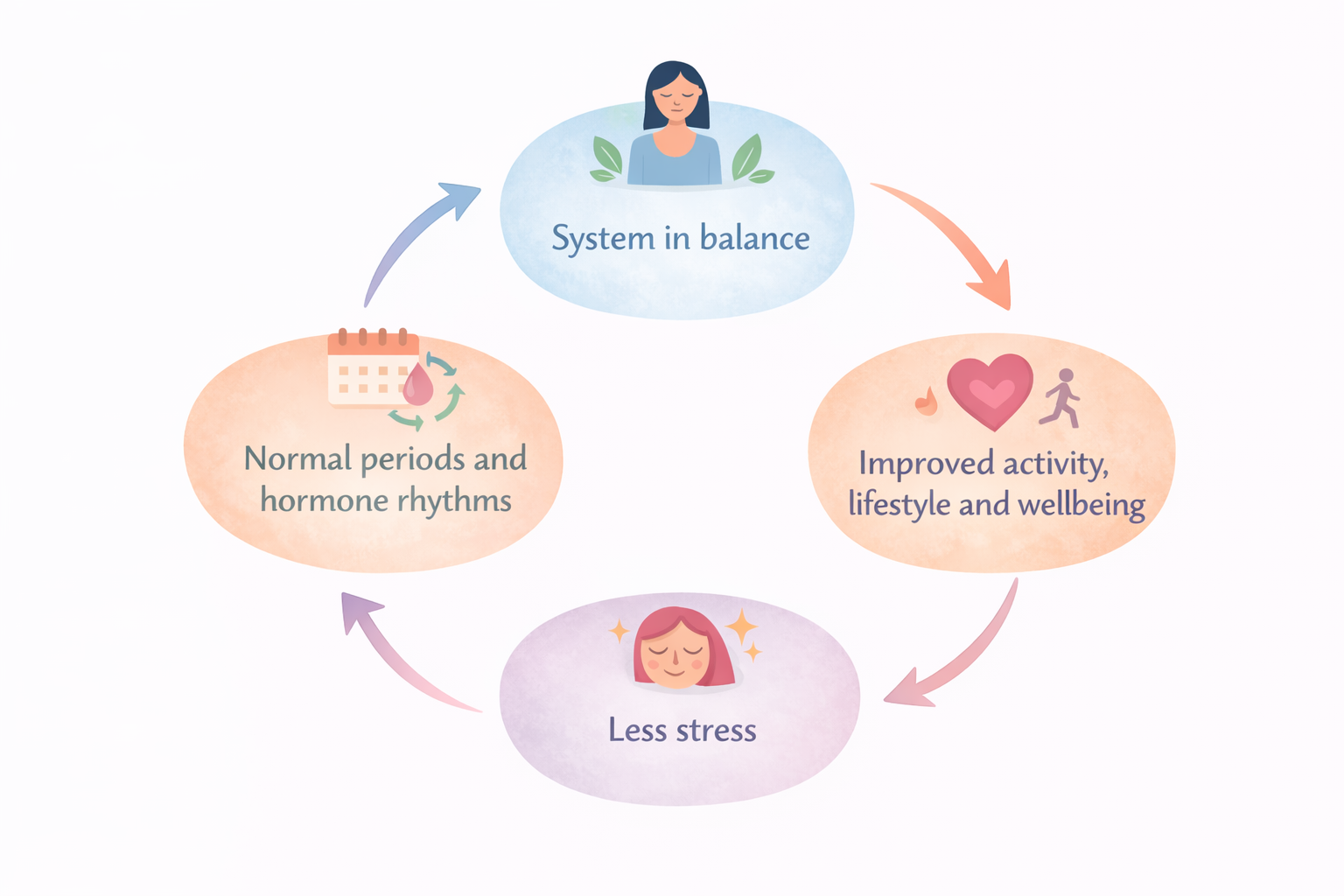
You don’t have to live in survival mode
With the right support and effective therapy, you can break the cycle and allow the body to reset into a state where it can function well. Stress does not need to run the show, even when life is busy and demanding.
If this article has resonated with you, or you’ve noticed changes in your cycle that don’t quite make sense, you’re not alone. We’d love to hear from you. Getting in touch for a conversation or assessment can be a gentle first step towards helping your body feel more settled, supported, and back in balance.